
Radon Fan Replacement in Manchester, Missouri
- Radon Ninjas
- Apr 14
- 10 min read

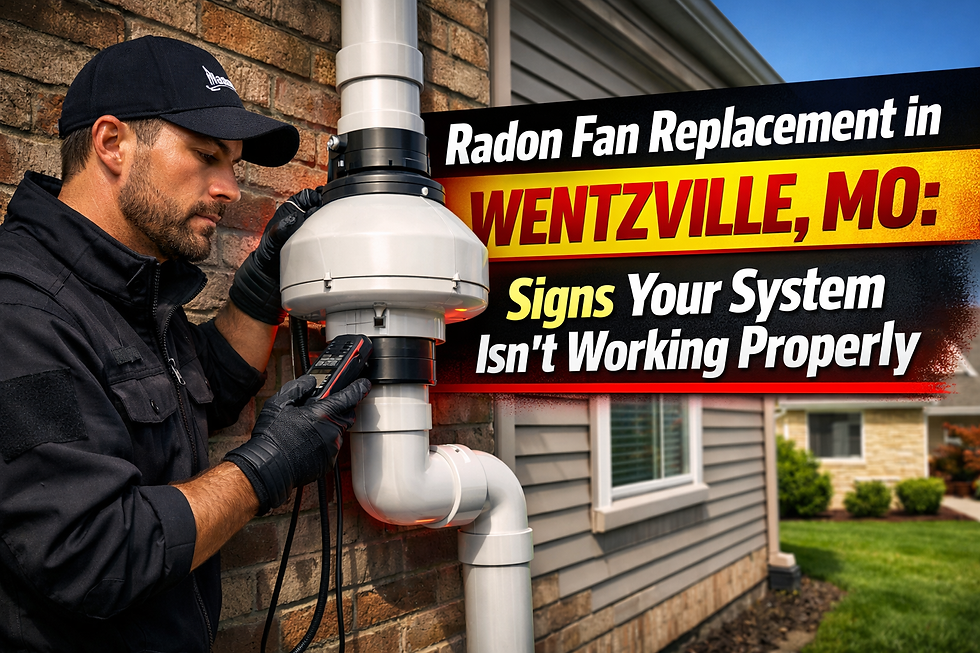
If your radon system has become loud, inconsistent, or appears to have stopped working altogether, Radon Fan Replacement in Manchester, Missouri should be addressed promptly and correctly. A radon fan is the working motor behind an active mitigation system. When it weakens or fails, the system may no longer create the pressure difference needed to pull radon gas from beneath the home and vent it safely above the roofline. EPA guidance continues to recommend taking corrective action when a home tests at or above 4.0 pCi/L, and it also notes that even lower levels still carry some risk.
For homeowners in Manchester, that matters for more than one reason. This is a well-established St. Louis County community west of the City of St. Louis, and many homes in the area are part of long-term ownership plans, resale preparation, or active real-estate transactions. The City of Manchester identifies itself as being in western St. Louis County, approximately 15 miles west of St. Louis. When a radon fan starts failing, homeowners, buyers, sellers, landlords, and real estate professionals usually need answers quickly and service done cleanly.
Radon Ninjas provides radon fan replacement in Manchester with a system-first approach. That means the job is not treated like a simple parts swap. The fan is evaluated in the context of the full mitigation system so the replacement fan, system condition, airflow path, and overall performance all make sense together.
What Radon Fan Replacement Actually Is
A radon fan replacement is the removal of an existing mitigation fan that is worn out, underperforming, noisy, seized, electrically compromised, or otherwise no longer appropriate for the home’s system. The new fan must be selected based on the system it serves, not just on what happens to be in stock.
That matters because radon fans are not one-size-fits-all. Different homes and different mitigation layouts require different fan characteristics. A house with a sub-slab depressurization system, a split-level configuration, a crawlspace component, or a more restrictive pipe path may need a different RadonAway model than a simpler installation. The goal is not merely to make the pipe vibrate again. The goal is to restore effective, efficient system performance.
At Radon Ninjas, radon fan replacement service in Manchester includes:
evaluation of the existing radon mitigation system
selection of the appropriate RadonAway replacement fan
replacement of worn flexible couplings
replacement of the U-Tube Manometer
replacement of the power cord
inspection of the full system for performance or efficiency issues
verification that the system is operating correctly
All RadonAway fans installed by Radon Ninjas include a 5-year warranty. All new radon mitigation systems installed by Radon Ninjas include a lifetime warranty.
Signs You May Need Radon Fan Replacement in Manchester, Missouri
Many homeowners first notice a problem because of noise. Others notice nothing at all until a real-estate test comes back elevated or they happen to look at the system and realize something is off.
Here are some of the most common signs that a radon fan may need attention:
The fan is making unusual noise
A healthy radon fan is usually noticeable but not disruptive. If the fan begins humming loudly, rattling, buzzing, grinding, or creating vibration through the pipe or wall, that is often a sign of wear, imbalance, mounting issues, or internal motor problems.
The U-Tube Manometer reading looks wrong
The manometer is a simple but important field indicator. If the reading has changed significantly from its normal operating position, has dropped unexpectedly, or shows no pressure difference at all, the system may not be functioning correctly. That does not always mean the fan is bad, but it does mean the system should be inspected.
The fan has stopped running
Some failures are obvious. The system goes silent, the fan no longer runs, and the mitigation system effectively becomes passive. EPA guidance notes that fans may last five years or more but can eventually need repair or replacement, and the EPA advises homeowners to check warning devices regularly and retest periodically to confirm radon levels remain low.
The home has elevated radon again
A failed fan is one reason radon levels can rise, but it is not the only one. Pipe leaks, disconnected fittings, system design limitations, changing house pressures, or new building conditions can also affect performance. That is exactly why professional diagnosis matters.
The system is older and showing wear
Even when the fan still runs, age-related issues in the couplings, electrical connection, discharge path, labels, or gauge can reduce confidence in the system. In some cases, replacing only the fan is appropriate. In others, broader repair or redesign recommendations make more sense.
Why a Failing Radon Fan Matters
A failing fan is not merely a mechanical inconvenience. It can affect the core purpose of the mitigation system.
Radon is a naturally occurring radioactive gas that can enter buildings from the soil below. The EPA states that testing is the only way to know your home’s radon level and recommends fixing homes that test at 4 pCi/L or higher. If the fan that drives an active soil depressurization system is no longer functioning properly, the system may not be reducing radon as intended.
For Manchester homeowners, this has several practical implications:
Health protection
The system exists to reduce indoor radon exposure. If the fan is not doing its job, the system may not be either.
Real-estate timing
A noisy or failed radon fan can surface during a listing, buyer inspection period, post-mitigation verification, or pre-closing retest. That can create unnecessary delay, negotiation pressure, or uncertainty if it is not handled quickly and professionally.
System reliability
A radon system should inspire confidence, not guesswork. When a fan starts to fail, homeowners often want to know whether they are dealing with a simple replacement or a bigger system issue. Proper inspection answers that question.
Energy and efficiency concerns
An incorrect replacement fan can be a problem too. Oversizing or mismatching a fan to the system can create avoidable noise, reduce efficiency, or fail to solve the underlying issue. The replacement must fit the actual pressure and flow demands of the mitigation system.
How Radon Fan Replacement Works
Professional radon mitigation repair should follow a logical sequence. At Radon Ninjas, the process is designed to identify the actual issue, install the right components, and make sure the system is operating correctly when the work is done.
1. Diagnose the problem
Before replacing anything, the system should be evaluated. Is the fan failed electrically? Is it still running but underperforming? Is the manometer behaving normally? Are the couplings cracked? Is there evidence of pipe leakage, improper mounting, or discharge problems?
This step is what separates professional system service from guesswork.
2. Match the replacement fan to the system
Radon Ninjas offers several types of RadonAway radon fans and replaces worn-out or failing fans with the appropriate model for the home. Fan selection should reflect system design, suction requirements, pipe layout, and the characteristics of the home.
3. Replace key wear components
A proper fan replacement service often includes more than the fan itself. Radon Ninjas also replaces:
flexible couplings
U-Tube Manometer
power cord
These parts are not minor details. They contribute to safe operation, system readability, and long-term reliability.
4. Inspect the rest of the mitigation system
This is a major part of the value. Radon Ninjas thoroughly inspects the full radon mitigation system to identify any other issues that may need to be addressed for better performance and efficiency.
That may include concerns related to sealing, pipe condition, condensation management, fan location, discharge path, mounting quality, accessibility, or general system layout.
5. Verify that the system is operating correctly
After installation, the system should be checked for proper function. The objective is not to leave behind a new fan and hope for the best. The objective is to confirm the mitigation system is again working as intended.
What Radon Ninjas Includes with Fan Replacement
Homeowners searching for radon mitigation fan replacement in Manchester often want to know what is actually included. With Radon Ninjas, the service is built around system performance, not just component exchange.
A typical radon fan replacement appointment may include:
Full system evaluation
The existing mitigation system is reviewed so the cause of the problem is understood before work proceeds.
Proper RadonAway fan selection
Several RadonAway fan options are available, and the replacement is chosen based on the home’s actual system requirements.
Flexible coupling replacement
Old couplings can dry out, crack, loosen, or simply age out. Replacing them during the fan change improves stability and helps reduce vibration and air leakage.
New U-Tube Manometer
A fresh manometer gives the homeowner a clear visual indicator of system operation going forward.
New power cord
Replacing the power cord helps keep the installation clean and dependable.
System inspection for other repair needs
If there are other problems affecting efficiency or performance, those can be identified at the same time rather than missed.
Operational verification
The work concludes with confirmation that the system is operating correctly.
Warranty clarity
All new RadonAway fans installed by Radon Ninjas include a 5-year warranty. If a Manchester homeowner ultimately needs a completely new radon mitigation system rather than only a fan replacement, all new systems installed by Radon Ninjas include a lifetime warranty.
Why Homeowners in Manchester Call for This Service
Manchester is the kind of market where homeowners tend to care about workmanship, system appearance, and long-term property confidence. In established St. Louis County neighborhoods, a radon system needs to work, but it also needs to look intentional and professionally maintained.
That is especially true when:
the home is going on the market
a buyer’s inspection raised concerns
the current owner wants to stay ahead of maintenance
a landlord needs dependable system service
a property manager wants consistent support across more than one home
the existing system is older and overdue for review
In practical terms, homeowners in Manchester are often not just asking, “Can you replace the fan?” They are asking, “Is the system itself in good shape, and can we trust it when this is done?”
That is the right question.
Radon Testing and Mitigation Context
A fan replacement is important, but it is only one part of radon control.
Radon testing still matters
The only way to know the radon level in a home is to test. The EPA continues to emphasize that testing is the only way to know whether a radon problem exists and whether corrective action is needed. If a fan has failed, if the system has been repaired, or if there is any concern about performance, testing is how the result gets verified in the real world.
Radon Ninjas also offers:
Radon Testing in Manchester, Missouri
post-mitigation verification
short-term and continuous radon monitoring
Sometimes the problem is bigger than the fan
Not every elevated retest or strange system behavior points to a bad fan alone. In some homes, the better solution is broader radon mitigation repair or even a system redesign. In others, an older passive system may need to be converted to active service. EPA consumer guidance also notes that if a passive system does not keep radon below the guideline, a qualified mitigator can activate the system by adding a fan.
Radon Ninjas also provides Radon Mitigation in Manchester, Missouri, including Active Soil Depressurization systems for basements, slabs, crawlspaces, and split-level homes.
Why Professional Radon Fan Replacement Matters
Some homeowners see a fan model number and assume replacement is a simple DIY task. In reality, that can be an expensive shortcut.
Proper diagnosis matters
If the fan is replaced without confirming the actual cause of the problem, the real issue may remain. Elevated radon after a repair is not something a homeowner wants to discover later during a transaction or follow-up test.
Fan sizing matters
The correct replacement must match the system. A random substitution can create noise, underperformance, excessive draw, or unnecessary wear.
Installation details matter
Couplings, electrical connection, mounting, weather exposure, condensate considerations, labeling, and discharge routing all affect how the system performs and how long it lasts. EPA guidance on radon systems also stresses correct venting practices, including venting above the roofline rather than at ground level.
Verification matters
A fan replacement should end with confidence, not uncertainty. The system should be checked, the manometer should make sense, and the homeowner should know what they are looking at afterward.
Why Choose Radon Ninjas
Radon Ninjas approaches fan replacement the way a serious mitigation company should: as a system performance service.
That means homeowners in Manchester get more than a quick equipment swap. They get:
a clear diagnosis of what is happening
appropriate RadonAway fan selection
replacement of critical wear components
inspection of the full mitigation system
attention to clean, discreet workmanship
clear communication about what was found and what was corrected
access to radon testing and mitigation service if the issue goes beyond the fan
The brand standard is simple: precise work, minimal disruption, and long-term confidence. That is the right fit for radon service, because radon mitigation is health infrastructure. It should be handled with discipline, not improvisation.
Frequently Asked Questions
Does a noisy radon fan mean it has failed?
Not always, but unusual noise is one of the most common warning signs. A loud hum, grinding sound, rattling, or new vibration can indicate wear, mounting issues, imbalance, or internal fan problems. The system should be inspected rather than guessed at.
How long does a radon fan usually last?
Fan life varies, but EPA guidance notes that mitigation fans may last five years or more and can eventually need repair or replacement. Warranty periods often do not exceed five years.
Can I just replace the fan myself?
Physically swapping a fan is not the same as correctly servicing a radon system. The replacement fan needs to match the actual system, wear components may need attention, and the rest of the mitigation setup should be inspected for other issues. Professional diagnosis reduces the risk of solving the wrong problem.
Should I retest after radon fan replacement?
Yes. Testing is the only way to confirm the home’s actual radon level. After a failed fan or significant system service, retesting is the practical way to verify performance. The EPA also recommends periodic retesting even when systems appear to be working normally.
What if my manometer reading changed but the fan still runs?
That can happen. A changed reading may indicate a system condition shift, blockage, leak, fan performance issue, or another change in pressure relationship. It should be evaluated rather than ignored.
Do you replace anything besides the fan?
Yes. Radon Ninjas also replaces the flexible couplings, U-Tube Manometer, and power cord as part of the service approach described for radon fan replacement work.
What fan brands do you use?
Radon Ninjas offers several types of RadonAway radon fans and selects the appropriate replacement based on the specific mitigation system.
What warranty comes with the new fan?
All new RadonAway fans installed by Radon Ninjas include a 5-year warranty.
What if my system needs more than a new fan?
That can be addressed. Radon Ninjas inspects the full mitigation system and can identify other issues affecting performance and efficiency. If broader repair, redesign, testing, or full mitigation is needed, those services are available as well.
Do you offer radon testing and mitigation in Manchester too?
Yes. In addition to Radon Fan Replacement in Manchester, Missouri, Radon Ninjas also offers Radon Testing and Radon Mitigation in the Manchester area.
Schedule Radon Fan Replacement in Manchester, Missouri
If your radon fan is loud, not working, or you simply do not trust that your system is performing the way it should, Radon Ninjas can help. Radon Fan Replacement in Manchester, Missouri should be handled with the right diagnosis, the right fan, and the right system review behind it.
Whether you need a straightforward RadonAway fan replacement, a full radon system inspection, post-repair radon testing, or a broader mitigation recommendation, Radon Ninjas provides the technical clarity and clean workmanship homeowners expect.
To schedule service, request testing, or ask about radon mitigation in Manchester, visit RadonNinjas.com or call (636) 336-6312.
Comments