
Annual Radon System Inspection Missouri: What Should Be Checked Every Year?

Mid-year home maintenance season is the right time for an annual radon system inspection Missouri homeowners can use to confirm their mitigation system is still doing its job. In St. Charles County, MO, homes with basements, slabs, crawlspaces, sump pits, foundation cracks, and older mitigation systems should not be treated as “set it and forget it.” A radon system is mechanical health infrastructure. It needs periodic verification.
A professionally installed radon mitigation system is designed to reduce radon entry by creating controlled suction beneath the slab, crawlspace membrane, or foundation area. But fans age, pipes shift, seals dry out, manometer readings change, crawlspace barriers get damaged, and home conditions evolve.
If you own a home in St. Charles County, Lincoln County, Warren County, St. Louis County, or Franklin County, an annual inspection helps confirm that your system is still operating, still moving air correctly, and still positioned to protect the home over time.
Why Annual Radon System Inspection Missouri Homeowners Schedule Matters
An annual radon system inspection Missouri homeowners schedule is not just a quick glance at the pipe. It should be a structured performance check of the radon mitigation system, including the fan, piping, seals, suction indicators, discharge location, and retesting needs.
Radon systems are usually quiet. That is a good thing when they are working properly, but it also means problems can go unnoticed. A fan may still make noise while losing performance. A manometer may show a change that the homeowner does not recognize. A pipe may separate slightly in an attic, garage, crawlspace, or exterior run. A sump lid seal may loosen. A crawlspace vapor barrier may be punctured by storage, service work, pests, or moisture movement.
The point of annual radon system maintenance is simple: verify performance before small problems become expensive problems.
In Missouri, especially across the Greater St. Louis and Eastern Missouri region, homes vary widely. St. Charles County subdivisions, older St. Louis County homes, rural Lincoln County properties, Warren County slab homes, and Franklin County basement homes may all require different system designs. That is why an annual inspection should be based on the actual system installed at the property, not a generic checklist.
What Should Be Checked During a Radon System Maintenance Visit?
A proper radon system maintenance visit should review the entire visible system and identify whether additional testing or diagnostics are needed. The inspection should be methodical, documented, and focused on long-term performance.
At a minimum, the inspection should include:
Radon fan operation
Radon manometer reading
Pipe condition and routing
System labeling
Exterior discharge condition
Suction point condition
Sump lid or slab sealing
Crawlspace vapor barrier condition, if applicable
Electrical connection condition
Unusual noise, vibration, or airflow concerns
Need for an annual radon retest
Signs that radon system diagnostics may be necessary
A mitigation system is only useful if it is still creating the pressure field it was designed to create. The annual inspection is designed to confirm whether the system appears functional and whether additional verification is appropriate.
Radon Fan Inspection: The Mechanical Heart of the System
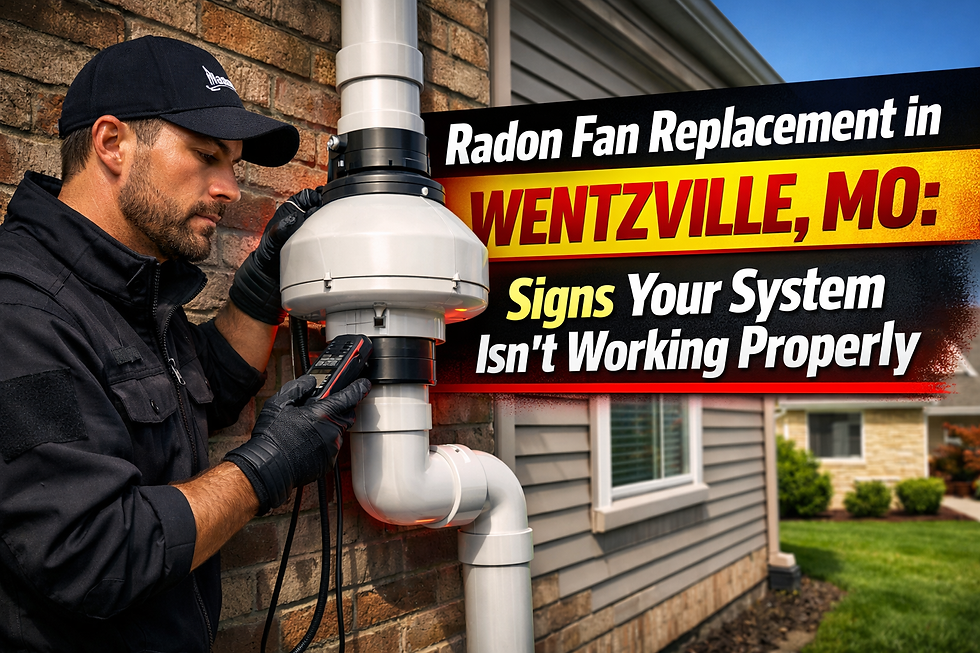
The radon fan is the active component that keeps an active soil depressurization system operating. During a radon fan inspection, the technician should confirm that the fan is running, mounted properly, and showing no obvious signs of failure.
A radon fan inspection should include checking for:
Abnormal vibration
Excessive noise
Water collection or gurgling sounds
Cracked fan housing
Loose rubber couplings
Failing clamps
Improper support
Weather exposure damage
Reduced suction indication
Age-related performance concerns
Radon fans do not last forever. Even a high-quality radon fan can eventually lose performance or fail. Some failures are obvious, such as a fan that stops running completely. Others are subtle, such as a fan that is still powered but no longer pulling adequate suction.
For homeowners searching for “radon system repair near me” or “radon fan replacement,” the trigger is often a noise change, a failed post-mitigation test, or a manometer reading that looks different than it used to. Annual inspection helps catch these issues earlier.
Radon Manometer Reading: What It Tells You and What It Does Not
The radon manometer is the U-shaped gauge commonly mounted on the radon pipe inside the home. It does not measure the radon level in the air. It indicates pressure difference in the system and helps show whether the fan is creating suction.
During an annual inspection, the radon manometer reading should be checked and compared against the expected operating range for that system. A normal-looking reading can vary by system design, fan size, pipe routing, suction point, soil conditions, and home construction.
The inspection should look for:
No visible pressure difference
A reading that appears unusually low
A reading that appears unusually high
Fluid loss or discoloration
A damaged or disconnected manometer tube
Changes from the homeowner’s prior observation
Evidence that the fan may not be pulling properly
A manometer reading is a useful system indicator, but it does not replace radon testing. A system may show suction and still need an annual radon retest to confirm the indoor radon level remains acceptable.
Radon Pipe Inspection: Routing, Supports, Seals, and Discharge
Radon pipe inspection is an important part of annual radon mitigation maintenance. The pipe is the pathway that moves soil gas from beneath the home to a safe exterior discharge location. If the pipe is cracked, separated, poorly supported, blocked, or damaged, the system may not perform as intended.
A radon pipe inspection should check:
Interior pipe condition
Exterior pipe condition
Couplings and fittings
Pipe supports and strapping
Penetrations through floors, walls, rim joists, ceilings, and roofs
Discharge height and location
Signs of condensation or water collection
Cracks, gaps, UV damage, or movement
Damage from landscaping, ladders, animals, storms, or service work
In St. Charles County and surrounding Missouri counties, exterior systems may experience weather exposure, wind, heat, freezing conditions, and physical damage over time. Attic-routed systems should also be checked where visible and accessible, especially if roof work, insulation work, or other trades have been in the area.
Clean pipe routing matters. A professional radon system should look engineered, not improvised. Annual inspection helps preserve both performance and professional installation quality.
Radon System Diagnostics: When a Basic Inspection Is Not Enough
Some inspections reveal that the system needs deeper radon system diagnostics. This may be the case when the fan is running but radon levels remain elevated, the manometer reading has changed significantly, airflow seems restricted, or the home has been modified since the original installation.
Radon system diagnostics may include evaluating:
Suction field extension
Fan sizing
Suction point performance
Pipe diameter and layout
Crawlspace vapor barrier integrity
Sump lid sealing
Foundation cracks and penetrations
HVAC or pressure changes in the home
Additions, finished basement changes, or new slab penetrations
Whether the system needs repair, reconfiguration, or performance correction
A system that worked well five years ago may need adjustment after a basement remodel, crawlspace work, sump pump replacement, foundation repair, drain tile work, or major HVAC changes.
For real-estate transactions, diagnostics are especially important. Buyers, sellers, realtors, and inspectors need reliable answers quickly. If a post-mitigation verification test shows an issue, the system should be evaluated by someone who understands both the technical side and the transaction timeline.
Annual Radon Retest: Why Inspection Alone Is Not Enough
An annual radon system inspection confirms visible and mechanical system condition. An annual radon retest confirms the indoor radon level.
Both matter.
A radon system can appear to be running while indoor radon levels still need verification. Testing is the only way to confirm the actual measured radon concentration inside the home during the test period. That is why homeowners should consider periodic retesting as part of their long-term radon mitigation maintenance plan.
An annual radon retest is especially smart when:
The home has an existing mitigation system
The fan has been replaced
The system has been repaired
The basement has been finished or remodeled
A crawlspace has been encapsulated or disturbed
A sump pump or drain system has been changed
Foundation cracks have appeared
The home is being listed for sale
A buyer, realtor, or inspector requests current radon documentation
The homeowner has not tested in several years
For landlords and property managers, annual retesting can also support better documentation across multiple properties. It creates a repeatable process instead of a reactive scramble.
Crawlspace Systems and Vapor Barrier Checks
Crawlspace homes require extra attention. A radon system connected to a crawlspace often depends on a properly sealed vapor barrier and active depressurization beneath that membrane. If the membrane is loose, torn, disconnected, or poorly sealed, the system may lose effectiveness.
An annual inspection should check the accessible crawlspace components, including:
Vapor barrier seams
Perimeter attachment
Pipe penetrations
Tears, punctures, or loose areas
Moisture concerns
Standing water or drainage issues
Signs of disturbance from service work or storage
Connection between the crawlspace system and the radon fan
Crawlspace encapsulation can be part of a radon control strategy, but it must be executed carefully. The membrane, seams, terminations, and suction connection all matter. A clean-looking crawlspace is not the same as a properly functioning radon mitigation system.
Missouri Summer Maintenance: Why Mid-Year Is a Smart Time to Inspect
Summer home maintenance season is a practical time to schedule a radon system performance check. Homeowners are already checking HVAC filters, sump pumps, gutters, exterior drainage, crawlspaces, and basement moisture. Adding radon system maintenance to that checklist makes sense.
Mid-year inspections are useful because Missouri homes can experience:
Heavy spring and summer rain
Sump pump activity
Basement humidity
Soil moisture changes
Foundation movement
Exterior pipe exposure
Crawlspace moisture issues
Storm-related damage
Landscaping or exterior service work near mitigation piping
In St. Charles County, Wentzville, St. Peters, St. Charles, O’Fallon, Lake St. Louis, and nearby communities, many homes rely on basements and lower-level living areas. Those spaces are exactly where radon system performance matters most.
For Lincoln County, Warren County, St. Louis County, and Franklin County homeowners, a summer inspection can help identify repairs before fall and winter closed-house conditions return.
Realtor, Landlord, and Property Manager Value
Annual radon system inspections are not only for individual homeowners. They are also valuable for realtors, home inspectors, landlords, and property managers who need confidence, documentation, and predictable service.
For realtors, a maintained radon system can reduce transaction surprises. If a seller has current inspection and retest documentation, it may help reduce delays when radon questions come up during a buyer’s inspection period.
For landlords and property managers, annual maintenance programs can help standardize service across multiple properties. Instead of waiting for a tenant complaint, failed fan, or transaction deadline, a recurring inspection process creates structure.
Radon Ninjas supports homeowners, realtors, inspectors, landlords, and property managers across Eastern Missouri with radon testing, mitigation, fan replacement, system repair, annual inspections, and system diagnostics.
What Homeowners Can Check Between Professional Visits
Homeowners can perform basic visual checks between professional inspections. These checks do not replace professional service, but they can help identify obvious concerns.
A homeowner can periodically look for:
The radon fan running
The manometer showing a pressure difference
Unusual fan noise
Loose pipe supports
Disconnected or damaged pipe
Water sounds in the pipe
Damaged exterior components
Loose sump lid seals
Crawlspace vapor barrier damage
Missing or damaged system labels
If anything looks different, sounds different, or appears damaged, schedule a professional radon system performance check. Do not assume the system is fine because the fan is making noise.
Signs Your Radon System May Need Repair
A radon system repair may be needed when inspection reveals a performance, mechanical, or installation issue. Common repair indicators include:
Fan not running
Fan making loud or unusual noise
Manometer reading at zero
Manometer reading has changed significantly
Pipe is cracked, separated, or unsupported
System discharge is damaged
Water is collecting in the pipe
Crawlspace membrane is torn or loose
Sump lid is unsealed or poorly sealed
Retest results show elevated radon levels
System appears poorly configured or incomplete
Professional repair should focus on correcting the cause, not just making the system look better. A clean installation matters, but performance matters more.
Schedule Professional Radon Service in St. Charles County
If your home already has a radon system, schedule an annual radon system inspection to confirm your system is still performing properly. Radon Ninjas provides professional radon system maintenance, fan inspections, radon system diagnostics, annual radon retesting, fan replacement, and system repair for homeowners in St. Charles County and surrounding Missouri communities.
We serve St. Charles County, Lincoln County, Warren County, St. Louis County, Franklin County, and nearby areas throughout Greater St. Louis and Eastern Missouri.
Call (636) 336-6312 or visit RadonNinjas.com to schedule an annual radon system inspection and ask about recurring maintenance options for your home, rental property, or managed portfolio.
FAQ: Annual Radon System Inspections in Missouri
How often should a radon mitigation system be inspected?
A radon mitigation system should be checked at least once a year as part of normal home maintenance. An annual radon system inspection Missouri homeowners schedule should review the fan, manometer reading, visible pipe condition, seals, discharge point, and whether a radon retest is recommended.
Does a radon manometer reading tell me my radon level?
No. A radon manometer reading shows pressure difference in the mitigation pipe. It helps indicate whether the fan is creating suction, but it does not measure indoor radon concentration. A radon test is needed to confirm the actual radon level in the home.
What is included in a radon fan inspection?
A radon fan inspection typically checks whether the fan is running, properly mounted, supported, and free from obvious damage, vibration, or abnormal noise. The technician should also review couplings, clamps, electrical condition, airflow indicators, and signs that fan performance may be declining.
When should I schedule an annual radon retest?
An annual radon retest is a smart option if your home has a mitigation system, if the system has been repaired, if the fan was replaced, if the basement or crawlspace was modified, or if the property is being prepared for sale. Testing is the only way to confirm the measured radon level.
Can a working radon fan still need repair?
Yes. A fan can still run while losing performance, vibrating excessively, or showing signs of wear. A radon system performance check can help determine whether the issue is the fan, the piping, the suction point, the crawlspace barrier, or another part of the system.
Do crawlspace radon systems need special maintenance?
Yes. Crawlspace systems often rely on a sealed vapor barrier and active suction beneath the membrane. Annual inspection should check for torn seams, loose perimeter sealing, punctures, moisture issues, and disturbed pipe connections.
Who should schedule recurring radon system maintenance?
Homeowners, landlords, property managers, realtors, and anyone responsible for multiple properties should consider recurring radon system maintenance. A scheduled inspection and retesting process helps reduce surprises and keeps documentation more organized.
Final Thoughts
A radon mitigation system should be quiet, clean, and reliable, but it should not be ignored. Annual inspection helps confirm the system is still operating as intended, identifies repair needs earlier, and supports better long-term documentation for homeowners, realtors, landlords, and property managers.
Radon mitigation is health infrastructure. Treat it that way.
Call Radon Ninjas LLC at (636) 336-6312 or visit RadonNinjas.com to schedule your annual radon system inspection in St. Charles County or the surrounding Eastern Missouri service area. #RadonNinjas #RadonMaintenance #AnnualRadonSystemInspectionMissouri #RadonSystemInspection #RadonSystemMaintenance #RadonFanInspection #RadonFanReplacement #RadonSystemDiagnostics #RadonMitigationMaintenance #RadonTesting #AnnualRadonRetest #RadonManometerReading #RadonPipeInspection #IndoorAirQuality #MissouriHomes #StCharlesCountyMO #LincolnCountyMO #WarrenCountyMO #StLouisCountyMO #FranklinCountyMO #MissouriRealEstate #HomeMaintenance #SummerHomeMaintenance #HealthyHome #BasementSafety #CrawlspaceEncapsulation #PropertyManagement #RealtorResources #RadonSystemRepair #RadonNinjasMO

Comments